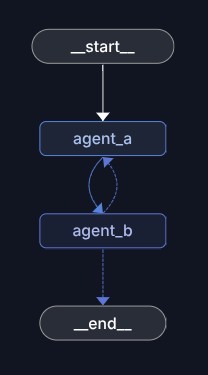
V1 — Two agents
Post-hoc Review
Agent A writes the answer first. Agent B then creates review criteria and checks the answer. If changes are needed, it sends feedback to Agent A.
More detailsI built and compared different AI review workflows to see when extra agents improve quality and when the extra cost is worth it.
I built this project after seeing the same pattern many times: one AI agent creates an answer, but a second agent finds missing details, edge cases, or problems. The first agent then improves its answer. The second agent checks it again.
This happened when reviewing pull requests, creating AI skills, and building evaluation frameworks. I sometimes had to move an answer back and forth between different models until the result was good enough.
I use LangGraph to build the workflows and manage the steps between agents. I use LangSmith to trace runs and inspect what each agent does. The app also evaluates final answers against saved criteria.
The small workflow became an experiment. I created three versions to compare their answers, cost, tokens, and speed.
Agent A writes the answer first. Agent B then creates review criteria and checks the answer. If changes are needed, it sends feedback to Agent A.
More details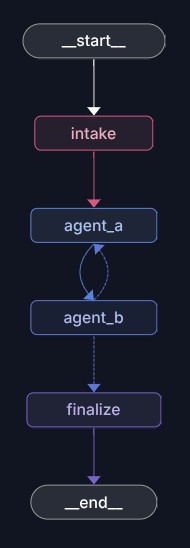
A moderator first makes the user's problem clearer and creates fixed criteria. Agent A writes the answer, and Agent B reviews it against those criteria.
More details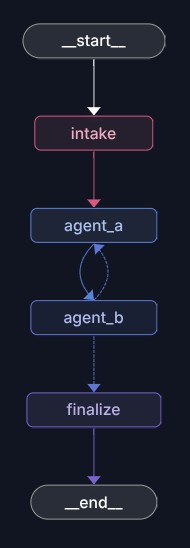
This version also starts with a moderator. But Agent B tries to prove that the answer is not ready. It approves only when it cannot find a real blocker.
More detailsI run the same tasks through different workflows and model combinations, then compare the results.